



The Last-Mile Problem in SAML Certificate Rotation
Table of Contents
The predictable problem that still turns into a fire drill
Certificate updates are the kind of identity task that sound easy when you first describe them. The expiration date is known ahead of time, reminders start showing up, and the work seems straightforward: update the certificate, validate trust, and move on.
But it almost never stays that clean.
Getting the work over the finish line usually takes more than expected. Someone has to identify the affected apps, confirm ownership, make the change in the right admin console, and test that authentication still works. Across a larger application suite, that turns routine maintenance into coordination work.
Certificate expiry is predictable. Getting the change done across the entire application suite is not.
It gets messy in the real world
The problem is not that teams forget certificates expire. It is that once the work reaches real systems, it stops behaving like a single routine task.
Some service providers support cleaner metadata-based updates, but others still require manual changes through app-specific consoles or vendor-managed workflows. Ownership is often spread across IAM, IT, application owners, and third parties. Documentation may be incomplete, and validation is usually manual. What looks simple quickly becomes a series of trust changes across systems that behave differently and are updated in different ways.
That fragmentation is part of the job practitioners are describing when they talk about certificate updates in the field. In one Entra discussion, a commenter put it plainly:
you do of course have to coordinate the update of the cert with the application which is certainly some coordination.[1]
That line is clumsy, but that is also the point. This is still human coordination work spread across systems that do not share one clean workflow. In many environments, the work is still held together with calendars, reminders, tickets, and app-by-app changes. Deadlines live in one place, application notes in another, and execution somewhere else. Teams end up coordinating across multiple owners, working through admin consoles one by one, and manually checking that authentication still works.
Microsoft’s own guidance now reflects the same reality, warning that:
manual rollover processes increasingly create operational burden and risk service disruption.[2]
This is no longer just tribal operator pain. Even the largest identity platforms are acknowledging that certificate changes become disruptive when they still depend on scattered manual execution.
Where the current approach breaks down
Most teams do have a process. That is not the problem.
The problem is that the process is built around tracking and coordination, not reliable execution. A date on the calendar is not the same as a completed certificate change. An open ticket is not the same as knowing the correct trust update happened in the correct system at the correct time.
That gap gets worse as the application estate gets harder. One delayed response, one stale internal note, one app-specific exception, or one missed validation step is enough to turn a known maintenance task into a production issue. One recent troubleshooting guide states the consequence directly:
The result: SSO breaks and users cannot log in.[3]
Once trust breaks, access breaks with it. Teams usually know what needs to happen. What they do not have is a reliable way to get the work executed in a coordinated, synchronized way across every affected system.
Automating the Last-Mile of Certificate Rotation
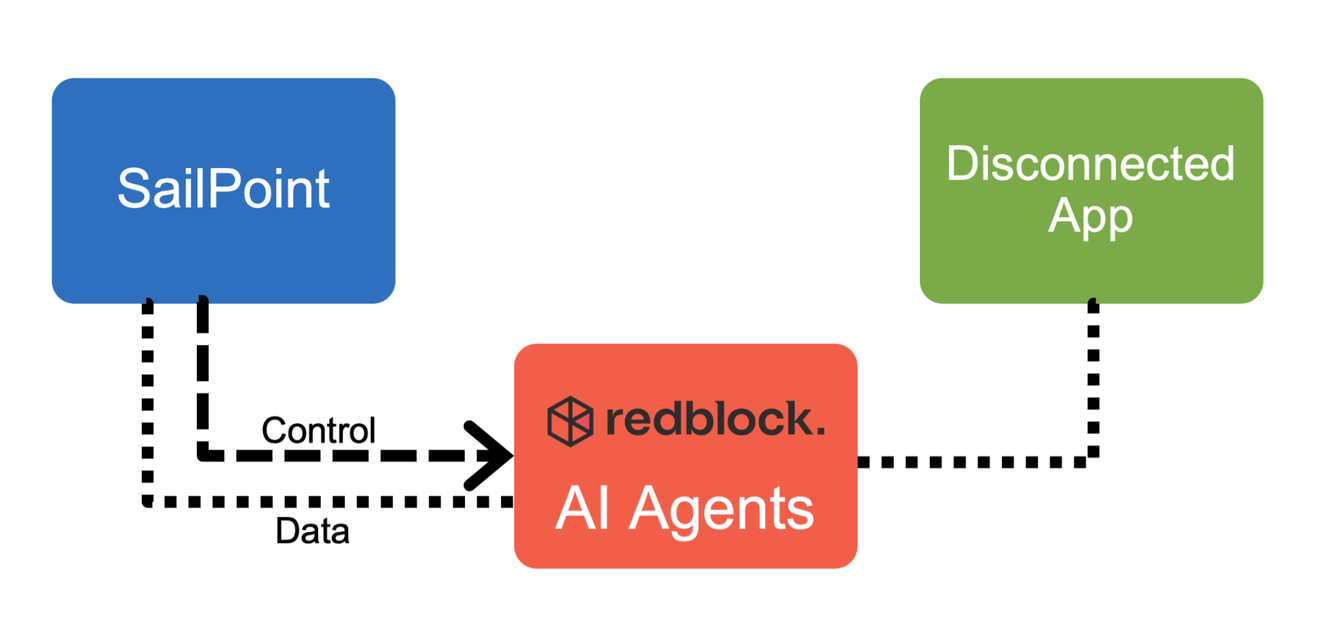
Redblock Agents can now is automate SAML certificate rotation across all of your applications, not just disconnected applications.
The agent can retrieve a new certificate from your Identity Provider, rotate the certificate in the target application and store it in your vault, and also automatically verify that SSO is still working.
This turns a manual coordination problem into an execution workflow. Instead of depending on people to move the task across systems, owners, and admin consoles, Redblock carries the work through the application itself and confirms the trust change succeeded.
Less manual work means faster certificate changes, lower operational burden, and fewer opportunities for a known maintenance task to become an outage.
See the Demo
In the demo below, you will see the Pipeline that is created to automate the SAML certificate rotation process and the steps that will be taken during the process.
References
[1] Reddit: https://www.reddit.com/r/entra/comments/18tnf1d/what_happens_when_you_do_not_renew_saml
[2] Microsoft Learn: https://learn.microsoft.com/en-us/entra/identity/enterprise-apps/tutorial-manage-certificates-for-federated-single-sign-on
Close Your IAM Blast Radius.
See how Redblock replaces ticket-driven identity execution with continuous lifecycle enforcement across your application estate.